Introduction to Performance Management
Performance Management is one of the most important functions of Human Resource Management (HRM). It is a continuous process that helps organizations improve employee performance, align individual goals with organizational objectives, and ensure long-term business success.
In today’s competitive business environment, companies can no longer rely only on annual appraisals. Instead, Performance Management focuses on continuous feedback, goal setting, performance monitoring, and employee development. When implemented effectively, it creates a high-performance culture where employees feel motivated, valued, and accountable.
This detailed guide explains Performance Management in HRM, including its meaning, process, objectives, methods, benefits, challenges, and best practices for modern organizations.
What Is Performance Management?
Performance Management is a systematic process of planning, monitoring, evaluating, and improving employee performance to achieve organizational goals. It ensures that employees understand their roles, expectations, and performance standards.
Unlike traditional performance appraisal systems, it is an ongoing and strategic approach. It focuses not only on evaluating past performance but also on developing employees for future roles.
Key Characteristics
-
Continuous process
-
Goal-oriented
-
Focused on development
-
Based on communication and feedback
-
Linked with organizational strategy
Objectives of Performance Management
The primary objective of Performance Management is to improve overall organizational performance by enhancing individual employee performance.
Key Objectives:
-
Align employee goals with organizational goals
-
Improve productivity and efficiency
-
Identify training and development needs
-
Motivate employees through feedback and recognition
-
Support career growth and succession planning
-
Ensure fair and objective performance evaluation
Importance of Performance Management in HRM
Performance Management plays a critical role in managing human capital effectively. It helps organizations create a structured system to measure, manage, and improve performance.
Why Performance Management Is Important:
Enhances employee engagement
Performance management actively involves employees in setting goals, tracking progress, and receiving feedback. When employees clearly understand what is expected from them and how their work contributes to organizational success, they feel more motivated and connected to their roles. Regular performance discussions make employees feel valued, heard, and recognized, which increases their engagement and commitment to the organization.
Improves communication between managers and employees
A strong performance management system encourages regular and open communication between managers and employees. Instead of limiting discussions to annual appraisals, managers provide continuous feedback, guidance, and support. This ongoing communication helps clarify expectations, address issues early, and build trust. As a result, misunderstandings are reduced and working relationships become stronger and more transparent.
Encourages accountability and ownership
Performance management clearly defines individual roles, responsibilities, and goals. When employees know exactly what they are responsible for, they take greater ownership of their work. Setting measurable objectives and tracking performance ensures that employees are accountable for their results. This sense of accountability motivates employees to perform better and take pride in their contributions.
Performance management provides objective data and documented evidence of employee performance. This information helps HR managers and leaders make fair and informed decisions regarding promotions, salary increments, bonuses, and rewards. Employees are more likely to trust the system when decisions are based on performance metrics rather than favoritism or assumptions.
Reduces performance gaps
Performance management helps identify gaps between expected performance and actual performance. Through regular evaluations and feedback, managers can detect skill shortages, behavioral issues, or productivity challenges at an early stage. Once these gaps are identified, organizations can take corrective actions such as training, coaching, or job redesign to improve employee performance and overall efficiency.
Builds a culture of continuous improvement
An effective performance management system promotes continuous learning and development rather than focusing only on past mistakes. Employees are encouraged to improve their skills, adopt better work practices, and strive for higher performance levels. Continuous feedback, goal revision, and development plans create a growth-oriented culture where improvement becomes an ongoing process, benefiting both employees and the organization.
Organizations that implement a strong Performance Management system are more likely to achieve sustainable growth.
Performance Management vs Performance Appraisal
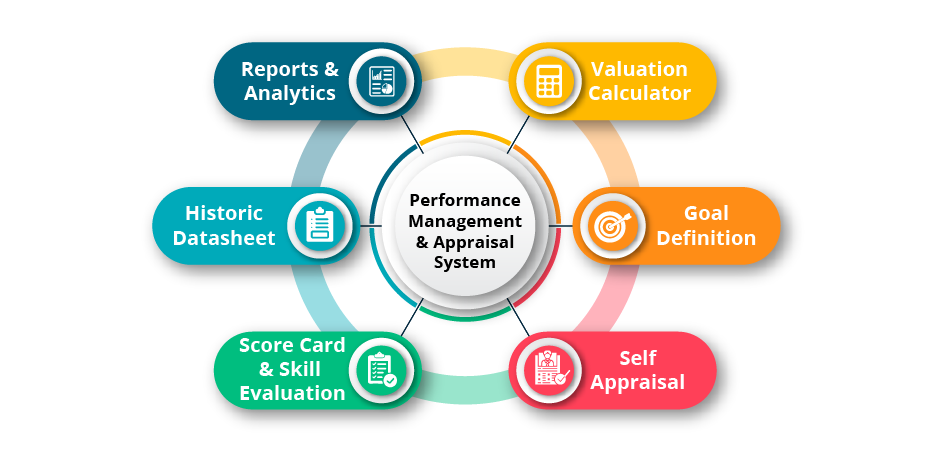
Many people confuse Performance Management with performance appraisal, but they are not the same.
| Basis of Comparison | Performance Management | Performance Appraisal |
|---|---|---|
| Meaning | A continuous process of managing, developing, and improving employee performance. | A formal system to evaluate an employee’s past performance. |
| Frequency | Continuous process (weekly, monthly, or quarterly feedback). | Periodic (annual or semi-annual). |
| Purpose | Align goals, develop employees, and support long-term growth. | Evaluate performance and support administrative decisions. |
| Approach | Collaborative and development-focused. | Formal, evaluative, and judgment-based. |
| Timing Focus | Present performance and future potential. | Past performance only. |
| Manager–Employee Relationship | Two-way communication and continuous feedback. | Mostly one-way evaluation. |
| Flexibility | Flexible and adaptable to changing goals. | Rigid and based on fixed criteria. |
| Outcome | Employee growth, engagement, and continuous improvement. | Ratings, documentation, promotions, increments, or penalties. |
| Orientation | Future-oriented. | Past-oriented. |
| Role in HRM | Strategic tool for performance improvement. | Administrative tool for performance review. |
Performance appraisal is only one part of the broader Performance Management system.
Performance Management Process
The Performance Management process consists of several interconnected stages. Each step is essential for creating an effective system.
1. Performance Planning
This is the first step where managers and employees set goals and expectations.
Activities include:
-
Defining job roles and responsibilities
-
Setting SMART goals
-
Establishing performance standards
-
Aligning individual objectives with company goals
2. Performance Monitoring
In this stage, employee performance is continuously monitored.
Methods include:
-
Regular check-ins
-
Progress reviews
-
Observation and reporting
-
Key performance indicators (KPIs)
Continuous monitoring helps identify issues early and allows corrective action.
3. Performance Development
Performance Management focuses strongly on employee development.
This includes:
-
Training programs
-
Coaching and mentoring
-
Skill enhancement initiatives
-
Career development planning
The goal is to help employees improve their capabilities and future performance.
4. Performance Appraisal
This stage involves evaluating employee performance against predefined goals and standards.
Tools used:
-
Rating scales
-
Self-assessment
-
Manager evaluation
-
360-degree feedback
Appraisal should be objective, fair, and evidence-based.
5. Feedback and Review
Feedback is the backbone of Performance Management.
Effective feedback should be:
-
Timely
-
Constructive
-
Specific
-
Two-way
This stage helps employees understand their strengths and areas for improvement.
6. Rewards and Recognition
Performance results are linked with rewards to motivate employees.
Rewards may include:
-
Salary increments
-
Bonuses
-
Promotions
-
Non-monetary recognition
A fair reward system strengthens employee trust and motivation.
Methods of Performance Management
Organizations use different performance management methods to evaluate, guide, and improve employee performance. Each method has its own approach and advantages.
1. Management by Objectives (MBO)
Management by Objectives is a method where employees and managers jointly set clear and measurable goals. Performance is evaluated based on how successfully these goals are achieved within a given time period.
Explanation:
In this method, both the manager and the employee agree on specific objectives at the beginning of the performance cycle. At the end of the cycle, performance is reviewed by comparing actual results with the agreed goals. This encourages responsibility and clarity in performance expectations.
Advantages:
-
Provides clear and measurable objectives
-
Encourages high employee involvement and ownership
-
Improves goal alignment with organizational objectives
2. 360-Degree Feedback
360-degree feedback collects performance feedback from multiple sources such as managers, peers, subordinates, and sometimes customers.
Explanation:
This method provides a complete picture of an employee’s behavior and performance. Instead of relying on only one evaluator, feedback is gathered from people who regularly interact with the employee.
Advantages:
-
Offers a holistic and balanced view of performance
-
Improves self-awareness and personal development
-
Reduces bias in performance evaluation
3. Key Performance Indicators (KPIs)
KPIs are specific, measurable, and quantifiable metrics used to evaluate employee performance.
Explanation:
Organizations define KPIs based on job roles and business goals. Employee performance is measured using numerical data such as targets achieved, sales numbers, productivity levels, or error rates.
Advantages:
-
Data-driven and objective evaluation
-
Easy to track and monitor progress
-
Helps in identifying performance gaps quickly
4. Balanced Scorecard
The Balanced Scorecard measures performance across multiple dimensions, not just financial results.
Explanation:
This method evaluates performance based on four key areas: financial performance, customer satisfaction, internal processes, and learning and growth. It ensures that employees focus on both short-term results and long-term development.
Advantages:
-
Aligns employee goals with organizational strategy
-
Encourages long-term and balanced performance
-
Improves overall organizational effectiveness
5. Continuous Performance Management
Continuous performance management focuses on regular feedback, real-time performance tracking, and flexible goal setting.
Explanation:
Instead of annual reviews, this approach promotes ongoing conversations between managers and employees. Goals are adjusted based on changing business needs, making it ideal for modern and fast-paced workplaces.
Advantages:
-
Highly suitable for modern and agile organizations
-
Improves employee engagement and motivation
-
Enables faster performance improvement
Role of Managers in Performance Management
Managers play a vital role in the success of Performance Management.
Their responsibilities include:
-
Setting clear expectations
-
Providing regular feedback
-
Coaching employees
-
Conducting fair evaluations
-
Supporting employee development
An ineffective manager can weaken even the best Performance Management system.
Role of Employees in Performance Management
Performance Management is not only the responsibility of HR or managers. Employees also play an active role.
Employee responsibilities include:
-
Understanding performance goals
-
Taking ownership of results
-
Seeking feedback
-
Improving skills
-
Participating in reviews honestly
Active employee participation improves the effectiveness of the system.
Benefits of Performance Management
A well-implemented Performance Management system provides multiple benefits to both employees and organizations.
Organizational Benefits:
-
Higher productivity
-
Better talent utilization
-
Improved business results
-
Strong leadership pipeline
-
Reduced employee turnover
Employee Benefits:
-
Clear expectations
-
Career development opportunities
-
Fair evaluation
-
Recognition and rewards
-
Increased motivation
Challenges in Performance Management
Despite its importance, Performance Management faces several challenges.
Common Challenges:
-
Bias and subjectivity
-
Poor feedback quality
-
Lack of manager training
-
Resistance to change
-
Overemphasis on ratings
-
Infrequent performance discussions
Organizations must address these challenges to ensure system effectiveness.
Best Practices for Effective Performance Management
To build a successful performance management system, organizations must go beyond traditional appraisals and adopt a structured, employee-focused approach. The following best practices help organizations improve productivity, engagement, and long-term success.
1. Set Clear and Measurable Goals
Clear goals provide direction and purpose to employees. Objectives should be specific, measurable, achievable, relevant, and time-bound (SMART). When employees understand what is expected of them, they can focus their efforts effectively and track their own progress.
2. Focus on continuous feedback
Regular feedback is essential for performance improvement. Instead of waiting for annual reviews, managers should provide timely and constructive feedback throughout the year. Continuous feedback helps employees correct issues early, stay motivated, and improve performance consistently.
3. Train Managers Effectively
Managers play a critical role in performance management. Organizations should train managers in coaching skills, communication, and fair evaluation practices. Well-trained managers can provide meaningful feedback, set realistic goals, and support employee development.
4. Encourage Employee Participation
Performance management should be a two-way process. Involving employees in goal setting, performance discussions, and development planning increases ownership and accountability. When employees actively participate, they are more engaged and committed to achieving results.
5. Use Technology and HR Tools
Modern HR tools and performance management software help track goals, feedback, and performance data efficiently. Technology enables real-time monitoring, reduces manual work, and provides data-driven insights for better decision-making.
6. Align Performance with Rewards
Linking performance outcomes to rewards such as promotions, incentives, recognition, and career growth motivates employees to perform better. A transparent reward system ensures fairness and reinforces a high-performance culture.
7. Review and Update the System Regularly
Business needs and work environments change over time. Organizations should regularly review and update their performance management system to ensure it remains relevant, fair, and effective. Continuous improvement keeps the system aligned with organizational goals.
Performance Management in the Modern Workplace
Performance management in the modern workplace has evolved from traditional annual appraisals to a more dynamic, continuous, and employee-centric process. Today’s organizations operate in fast-changing, technology-driven environments, which require flexible and real-time approaches to managing performance.
Shift from Traditional to Continuous Performance Management
In the modern workplace, performance management is no longer limited to yearly evaluations. Instead, it focuses on continuous feedback, regular check-ins, and ongoing coaching. Managers and employees have frequent discussions about goals, progress, challenges, and development needs, allowing quick adjustments and better results.
Modern Trends Include:
-
Real-time feedback systems
-
Performance management software
-
Agile goal setting
-
Emphasis on employee experience
-
Data-driven decision-making
Organizations must adapt their Performance Management approach to remain competitive.
Performance Management and Training & Development
Performance Management is closely linked with training and development.
Performance data helps HR identify:
-
Skill gaps
-
High-potential employees
-
Training needs
-
Leadership development opportunities
This integration ensures continuous learning and growth.
Future of Performance Management
The future of Performance Management focuses on:
-
Continuous conversations instead of annual reviews
-
Coaching-based leadership
-
Employee well-being
-
Personalized development plans
-
AI-powered performance analytics
Companies that embrace these changes will gain a competitive advantage.
Conclusion
Performance Management is a strategic HR function that plays a crucial role in organizational success. It is not just about evaluating performance but about developing people, improving communication, and achieving long-term goals its also help how to given interview questions and answer.
By implementing an effective Performance Management system, organizations can build a motivated workforce, improve productivity, and create a culture of excellence. As workplaces continue to evolve, Performance Management must also adapt to meet modern business and employee needs.
Frequently Asked Questions (FAQs)
1. What is performance management?
Performance management is a continuous process of setting goals, monitoring performance, providing feedback, and developing employees to improve individual and organizational performance.
2. What is the main purpose of performance management?
The main purpose is to align employee goals with organizational objectives, improve productivity, support employee development, and create a culture of continuous improvement.
3. How is performance management different from performance appraisal?
Performance management is an ongoing, development-focused process, while performance appraisal is a periodic evaluation of an employee’s past performance in its strategic human resource management.
4. Why is continuous feedback important in performance management?
Continuous feedback helps employees understand their strengths and areas for improvement in real time. It increases engagement, improves performance, and reduces surprises during formal reviews.
5. What are the key components of a performance management system?
The key components include goal setting, continuous feedback, performance monitoring, employee development, performance reviews, and reward alignment.
6. What role do managers play in performance management?
Managers set goals, provide feedback, coach employees, evaluate performance fairly, and support learning and development.